Understanding Boiler Servicing & Boiler Repairs
Regular boiler servicing is essential for safe, efficient, and reliable heating. It includes safety inspections, performance testing, cleaning, and replacing manufacturer-recommended parts. Routine maintenance helps detect potential problems early, reducing the risk of breakdowns, improving energy efficiency, and extending your boiler’s lifespan, while ensuring year-round comfort and peace of mind.
Boiler repairs become necessary when a fault or breakdown prevents your system from providing heat or hot water. Unlike repair services, routine boiler servicing and maintenance plans such as our “Cosy Plan” are designed to prevent problems before they occur. They focus on regular inspections, safety checks, and ongoing upkeep, rather than covering the cost of repairs or the replacement of defective components.

Standard Boiler Service
Keep your warranty in place with the Boiler Safety & Performance Inspection (Boilers with Warranty / Guarantee)
£100/Annualy
Includes:
- Test all safety devices
- Flue gas analysis
- Inspect for water damage
- Gas leaks ( All House )
- Gas Consumption
Not Included:
- Extended Phone/ Video Support
- Parts – Gaskets, Seals, Electrodes
- Chemical re-dosing
- Water Connections
- External Pumps & Controls
- Radiator circulation
- Locating system leaks
- Boiler Repairs
Cosy Home Plus Plan
Inc Homeowners Gas Safety service parts system protection (Boilers with Warranty / Guarantee)
£10/Monthly
Includes:
- Extended Phone/ Video Support
- Parts – Gaskets, Seals, Electrodes
- Chemical test & re-dosing
- Test all safety devices
- Flue gas analysis
- Inspect for water damage
- Gas leaks ( All House )
- Gas Consumption
- Condensate Trap
- Water Connections
Not Included:
- External Pumps & Controls
- Radiator circulation
- Locating system leaks
- Boiler Repairs
Cosy Home Extra Plan
Homeowners Extra Support Plan for Boilers out of Warranty and needing some Extra care! (existing customers only)
£13/Monthly
Includes:
- Extended Phone/ Video Support
- Parts – Gaskets, Seals, Electrodes
- Chemical test & re-dosing
- Test all safety devices
- Flue gas analysis
- Inspect for water damage
- Gas leaks ( All House )
- Gas Consumption
- Condensate Trap
- Water Connections
Not Included:
- External Pumps & Controls
- Radiator circulation
- Locating system leaks
- Boiler Repairs
Helping You Succeed
Professional Boiler Servicing You Can Trust
Regular boiler servicing is essential for maintaining the safety, efficiency, and reliability of your heating system. Our experienced engineers carry out thorough inspections, cleaning, and performance checks to ensure your boiler operates at its best throughout the year. Preventative maintenance helps identify potential issues early, reducing the risk of unexpected breakdowns and costly repairs.
A well-maintained boiler also consumes less energy, helping to lower utility bills and extend the lifespan of your system. With dependable service, expert advice, and a commitment to quality, we provide complete peace of mind for homeowners and businesses alike.
- Thorough Safety & Performance Checks
- Annual Servicing by Qualified Engineers
- Ongoing Support & Expert Advice
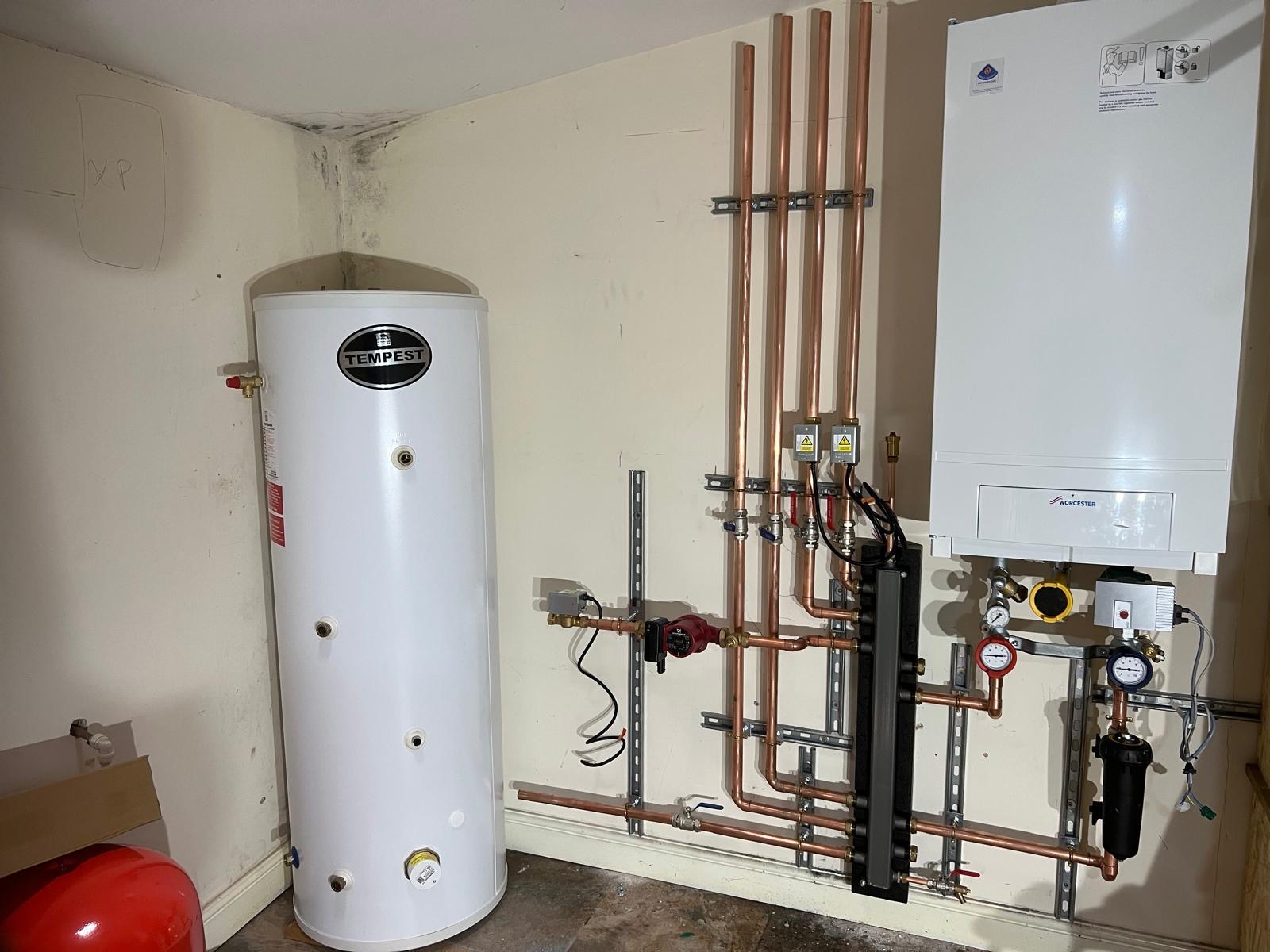

Annual boiler servicing
Safety & performance testing extends your boilers lifespan
FAQ
HDE (UK) LTD Solar Energy questions
Certainly! Here are 20 frequently asked questions with concise answers about solar panel installation, tailored for a local HVAC and solar company serving Sheffield and the surrounding area.
By partnering with HDE (UK) LTD—proudly serving customers across the UK since 2010—and using an MCS-certified installer, the application process is handled on your behalf, with the grant deducted directly from the installation cost. Extended through 2028, the BUS makes it easier and more affordable to embrace sustainable heating, lower energy bills, and reduce your property’s carbon footprint.
Applying for the Boiler Upgrade Scheme (BUS) is simple, especially with the support of HDE (UK) LTD, which has been delivering trusted heating solutions throughout the UK since 2010.
1. Choose an MCS-Certified Installer: Partner with an MCS-certified provider such as HDE (UK) LTD, proudly serving customers across the UK since 2010. Your installer will guide you through the entire process and handle the necessary paperwork.
2. Receive a Property Assessment and Quotation: The installer will assess your property, recommend a suitable low-carbon heating system, provide a detailed quotation, and confirm your eligibility for the scheme.
3. Grant Application Submission: Once you approve the proposal, the installer submits the Boiler Upgrade Scheme application to Ofgem on your behalf, so there is no need for you to complete any forms.
4. Grant Deduction: If approved, the grant—currently up to £7,500 for eligible heat pump installations—is deducted directly from the installation cost, reducing your upfront investment.
5. Final Confirmation and Installation: Ofgem will contact you to confirm that you wish to proceed. After confirmation, the installation can begin, allowing you to enjoy an efficient, environmentally friendly heating system with confidence.
For businesses in Sheffield and South Yorkshire, HDE (UK) LTD—proudly serving clients throughout the UK since 2010—can help you access support available through the South Yorkshire Low Carbon Project. Further details are available from Sheffield City Council – Low Carbon Project.
For businesses elsewhere in the UK, HDE (UK) LTD can also advise on regional funding opportunities, which can be explored using Ofgem’s grant finder at Ofgem – Business Energy Efficiency Grants and Schemes.
HDE (UK) LTD installs high-performance systems that can deliver three to four units of heat for every unit of electricity consumed, helping to reduce both energy bills and carbon emissions. For optimal performance, professional installation and good home insulation are essential, ensuring reliable, year-round comfort and efficiency.
On average, you can expect an ASHP to cost between £500 to £1,000 per year to run, while a GSHP may cost between £400 and £700 per year, thanks to its higher efficiency. That said, both options can lead to big savings on your energy bills compared to traditional gas or oil heating, particularly if your home is well insulated.
The running costs are also influenced by the coefficient of performance (COP), which measures how efficiently your heat pump converts electricity into heat. The better the insulation and the more efficient the system, the more you’ll save in the long run.
Since 2010, HDE (UK) LTD has been helping customers across the UK select and install the heat pump system best suited to their property, enabling them to enjoy reliable comfort while reducing energy use and carbon emissions.
In well-insulated homes, they can also offer lower running costs and substantially reduce carbon emissions, particularly when powered by renewable electricity. Boilers generally have a lower initial installation cost, but they typically incur higher fuel expenses and a greater environmental impact over time.
Since 2010, HDE (UK) LTD has been helping homeowners across the UK choose and install heating solutions that balance comfort, efficiency, and sustainability for their individual needs.
They are particularly well suited to properties with existing wet central-heating systems. Air-to-air heat pumps, by contrast, deliver warm air directly into the home through indoor units and can often provide cooling during summer, making them an excellent choice for homes without radiators. Both technologies are highly efficient: air-to-water systems offer the added benefit of hot water production,
while air-to-air units are generally simpler and less expensive to install. Since 2010, HDE (UK) LTD has been helping customers throughout the UK select the heat pump solution that best matches their property, comfort requirements, and energy goals.
Modern ASHPs are engineered for quiet operation and are usually positioned away from bedrooms and living spaces to minimise disturbance. Ground Source Heat Pumps (GSHPs) are generally even quieter, as much of their equipment is located underground or indoors.
Since 2010, HDE (UK) LTD has been designing and installing heat pump systems throughout the UK with careful attention to siting and compliance with all applicable noise regulations, ensuring efficient and unobtrusive performance for homeowners.